 +1 770-461-9001
  info@lowerental.com



Case Study: Dynamic Defrost
Most retailers never see what’s happening inside a refrigerated case.
They only notice when something goes wrong; a temperature alarm, a service call, or a unit that struggles to recover after a busy shopping period.
To better understand how intelligent monitoring can improve refrigeration performance, Lowe Rental monitored a Genova low-temperature freezer equipped with LoweConex over a five-day operating period.
The objective wasn’t simply to record temperatures. It was to understand how the refrigeration system performed during normal operation and compare those results with a conventional self-contained freezer.
Consistent Performance Under Real Operating Conditions
Throughout the monitoring period, the Genova maintained remarkably stable case temperatures.
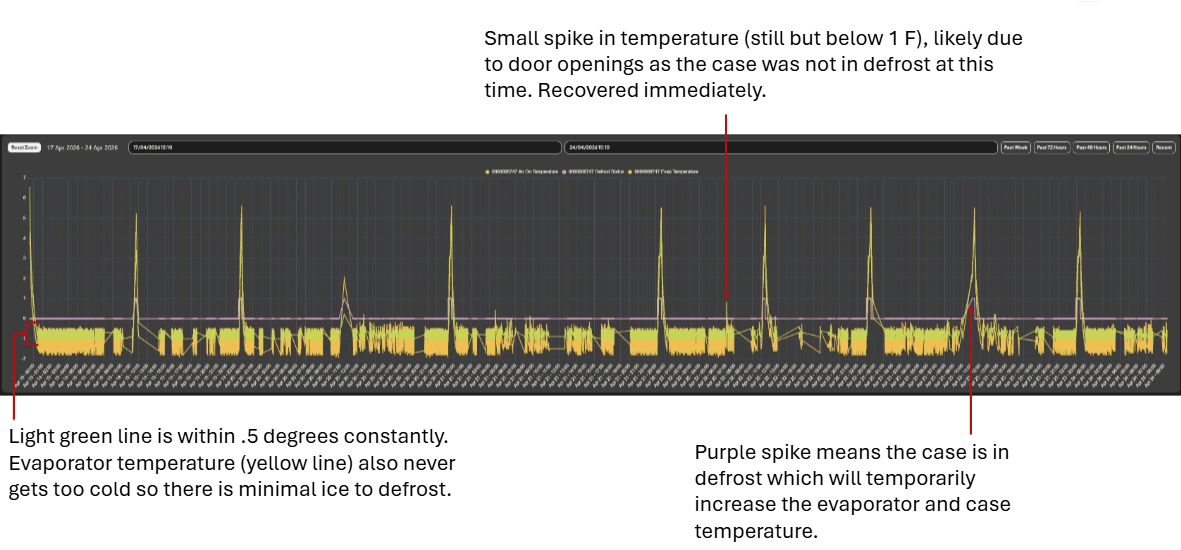
During five days of operation, the case recorded only four brief instances where the product temperature rose above 0°F, totaling just under 29 minutes. More importantly, the temperature never exceeded 1°F, demonstrating how quickly the unit recovered after routine defrost cycles and normal door openings.
The performance graph tells an even more interesting story.
The green line, representing case temperature, remains remarkably steady throughout the monitoring period. The small increases that do occur correspond with scheduled defrost cycles or normal door openings before quickly returning to the target temperature.
At the same time, evaporator temperatures remain within a controlled operating range. Because the evaporator isn’t running colder than necessary, less ice accumulates on the coil. That means better airflow, more efficient refrigeration, and less time spent recovering after each defrost cycle.
A Different Story for Conventional Self-Contained Cases
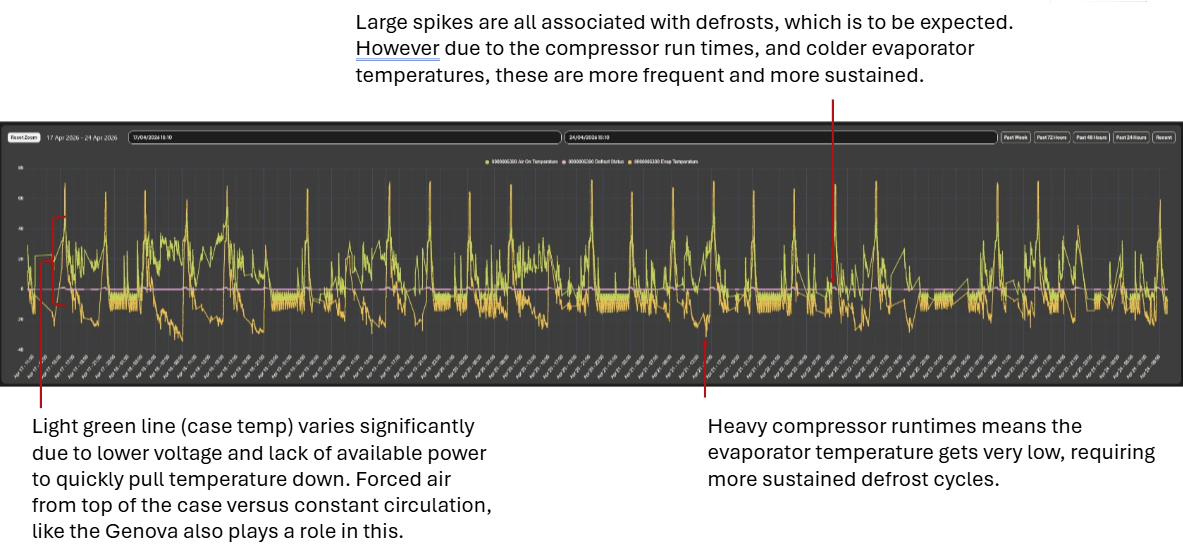
The comparison unit showed a very different operating profile.
Longer compressor runtimes drove the evaporator to much colder temperatures, creating more frost and ice buildup over time.
As that ice accumulated, the unit required longer and more frequent defrost cycles to restore airflow. Those extended defrost periods created larger temperature swings and longer recovery times before the case returned to its normal operating condition.
Why Retailers Should Care
This is where LoweConex makes a meaningful difference.
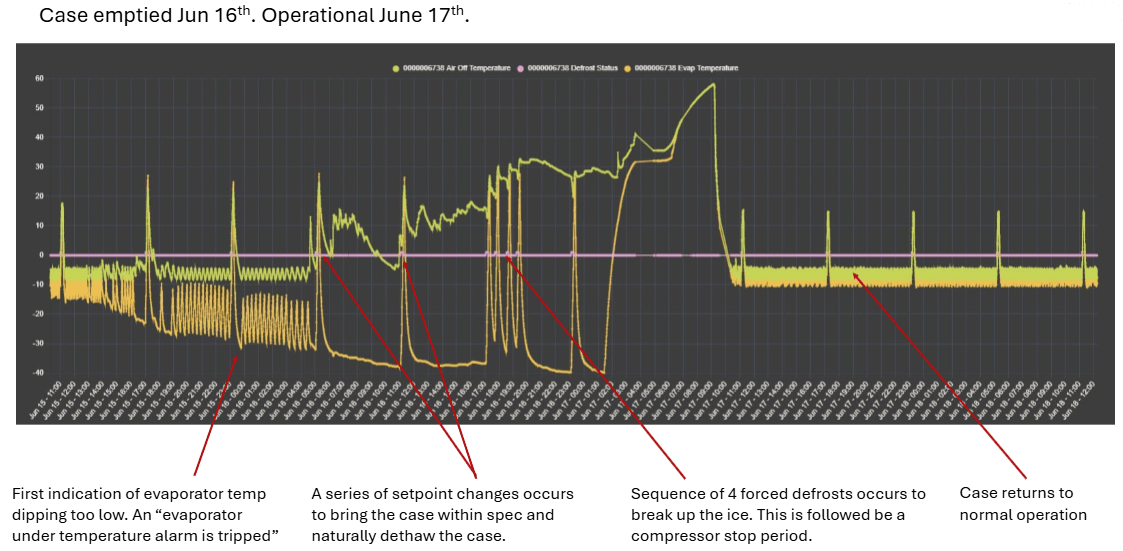
Rather than relying solely on scheduled defrost cycles, LoweConex continuously monitors operating conditions, including evaporator temperature, compressor status, and defrost activity. If the system detects conditions that suggest excessive ice buildup is developing, authorized users can remotely adjust operating parameters or initiate additional defrost sequences before performance is significantly affected.
For retailers, that means fewer disruptions, more consistent case performance, and fewer situations that require an on-site service visit.
The result isn’t that the case operates on its own, it’s that store teams and service technicians have better visibility into what’s happening and the tools to respond proactively instead of reactively.