Critical kitchen and cold infrastructure rental keeping essential services running during refurbishments and emergency response.

Learn more

Find answers to commonly asked questions.

Read our FAQs
Request A Quote

© 2026 Lowe Rental. All rights reserved.

Your Rental Quote

Case Studies

Grocery eCommerce Is Still Evolving – Refrigeration Should Too

The conversation around grocery eCommerce has changed.

A few years ago, retailers were focused on keeping up with demand. Today, the challenge is determining the best way to fulfill online orders while remaining flexible enough to adapt as customer expectations and technology continue to evolve.

According to Mercatus, online grocery is expected to account for more than 21% of the U.S. grocery market, with micro-fulfillment centers generating an estimated $30 million in annual revenue per location. Yet despite continued investment in dedicated fulfillment facilities, nearly 92% of online grocery orders are still expected to be fulfilled from existing stores or centralized fulfillment operations.

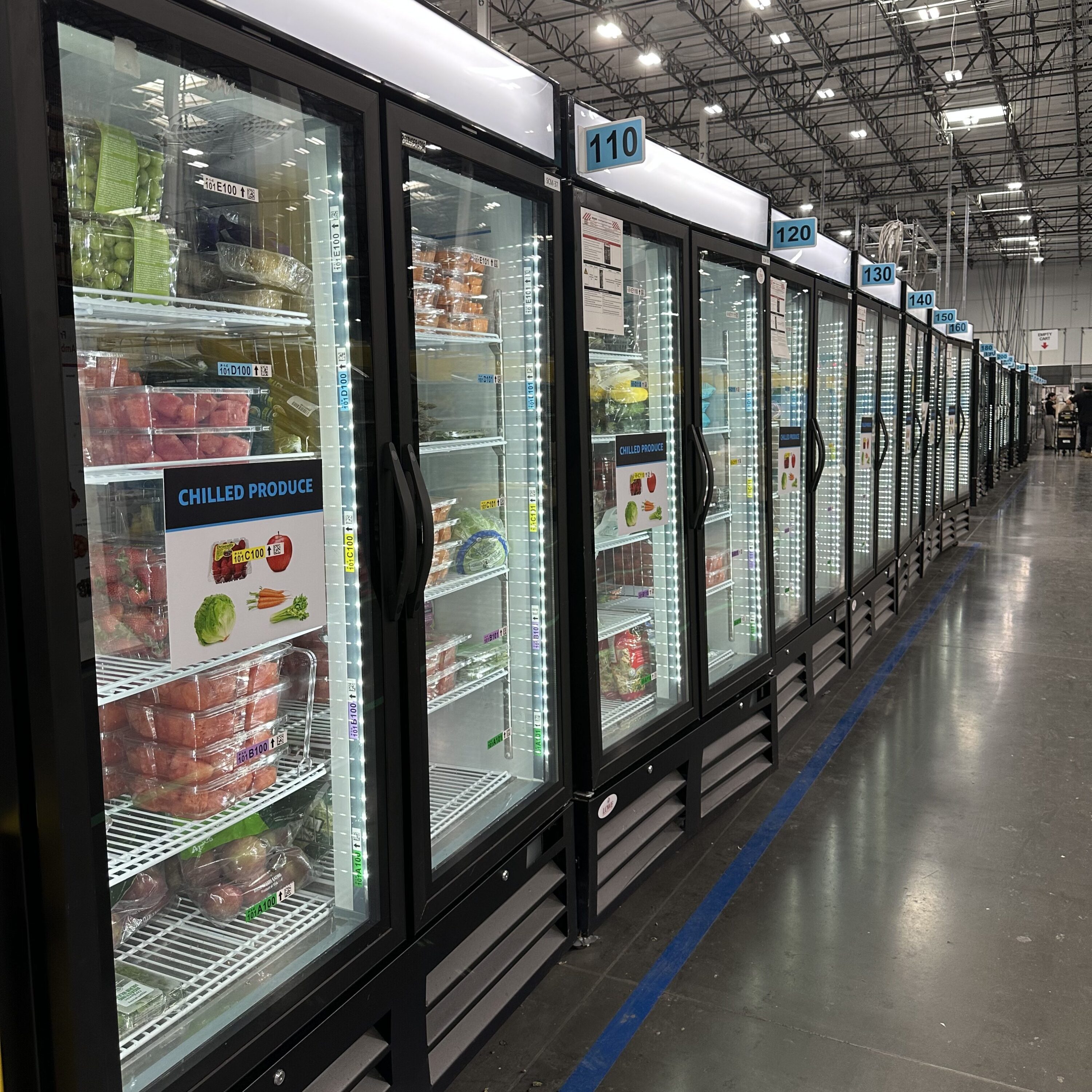
Rows of glass-fronted refrigeration cases displaying various food products in a retail environment.

The conversation around grocery eCommerce has changed.

A few years ago, retailers were focused on keeping up with demand. Today, the challenge is determining the best way to fulfill online orders while remaining flexible enough to adapt as customer expectations and technology continue to evolve.

According to Mercatus, online grocery is expected to account for more than 21% of the U.S. grocery market, with micro-fulfillment centers generating an estimated $30 million in annual revenue per location. Yet despite continued investment in dedicated fulfillment facilities, nearly 92% of online grocery orders are still expected to be fulfilled from existing stores or centralized fulfillment operations.

There is no single blueprint for success.

Some retailers are expanding backroom picking operations inside existing stores. Others are investing in micro-fulfillment centers or centralized facilities. Many are revisiting dark stores; locations dedicated exclusively to fulfilling online orders without serving in-store shoppers.

The common thread across every model is the need for refrigeration that can be deployed quickly, support demanding picking operations, and adapt as fulfillment strategies continue to change.

Building for a Business That’s Still Changing

Unlike a traditional supermarket designed to operate for decades, many eCommerce facilities have a much shorter planning horizon.

Retailers continue to test automation, picking workflows, staging layouts, and fulfillment models. A facility that operates as a dark store today could become a micro-fulfillment center tomorrow or be converted back into a traditional retail space as market conditions change.

That uncertainty makes flexibility incredibly valuable.

Rather than investing significant capital into permanent refrigeration infrastructure for facilities that may evolve over the next few years, many retailers are choosing solutions that can be deployed quickly, relocated easily, and scaled as demand changes.

Dark Stores Continue to Play an Important Role

While dark stores aren’t the right solution for every retailer, they remain an effective option in markets with sustained online grocery demand.

Designed exclusively for order fulfillment, dark stores eliminate customer traffic and allow layouts to be optimized for faster picking, improved inventory management, and higher order throughput.

Lowe Rental has supported retailers as they converted facilities into fully operational dark stores, providing refrigerated solutions that could be installed rapidly and adapted as operations evolved. Rather than waiting for permanent refrigeration systems to be designed and constructed, retailers were able to establish temperature-controlled picking environments quickly while maintaining the flexibility to modify layouts or scale operations as demand changed.

Whether launching a pilot program, expanding into a new market, or increasing seasonal capacity, refrigeration should support operational agility—not limit it.

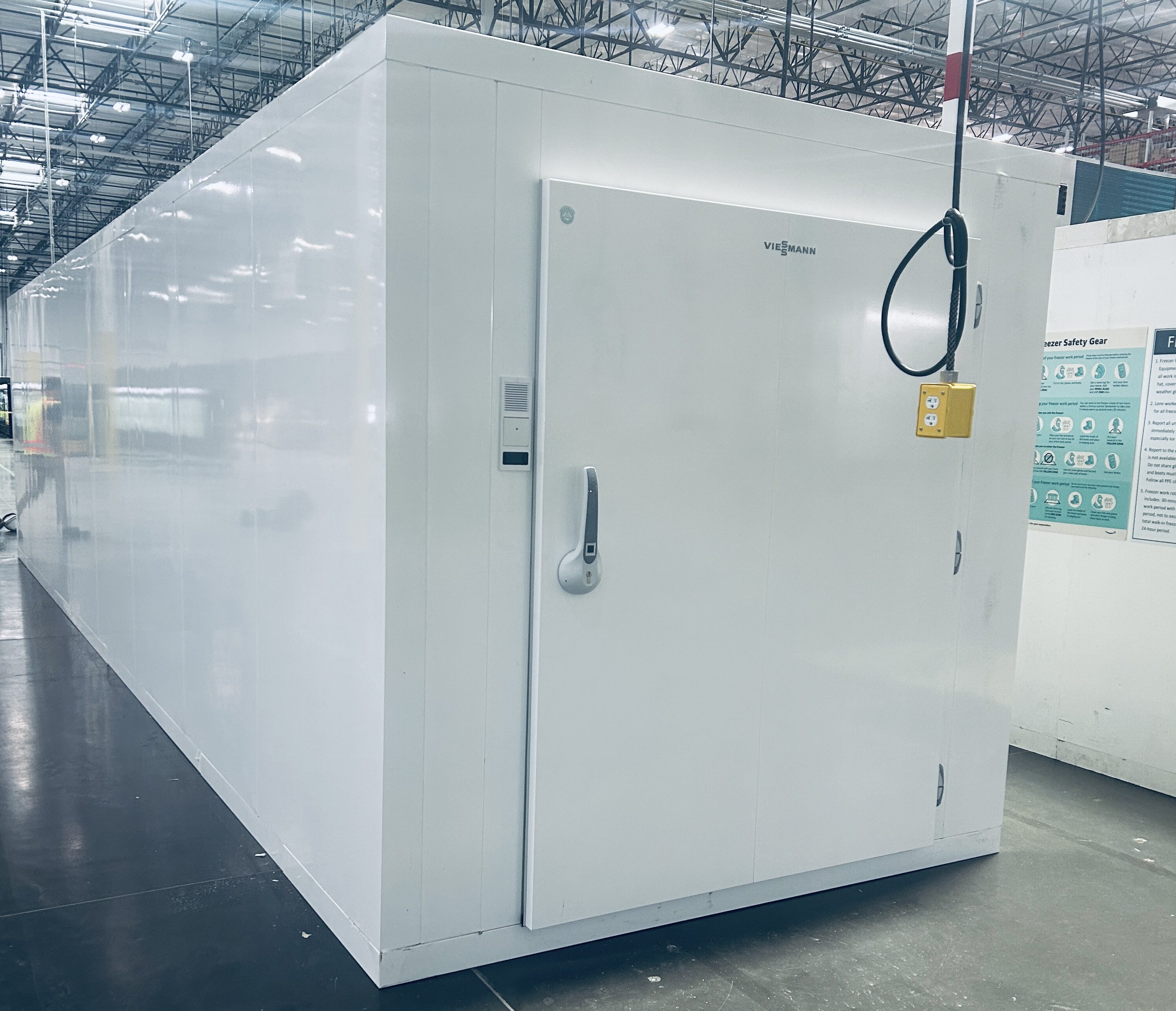
Large white refrigeration unit with a door, set against a grey floor in a commercial space.

Designed for High-Frequency Picking

Fulfillment environments place very different demands on refrigeration than a traditional supermarket sales floor.

A frozen case in a retail store may be opened dozens of times each day by customers.

A freezer supporting online order fulfillment can be opened hundreds, or even more than a thousand, times in a single day as associates continuously pick orders.

Every door opening introduces warm, humid air into the case, increasing frost buildup and forcing the refrigeration system to work harder to maintain temperature.

That’s exactly the environment the Genova was designed for.

The Genova features a bottom-mounted refrigeration system that promotes efficient airflow while minimizing product interference. This design helps maintain consistent temperatures during heavy picking activity while maximizing product capacity.

When paired with LoweConex, Dynamic Defrost continuously monitors operating conditions and can help identify excessive ice buildup before it affects performance, reducing unnecessary service visits and helping keep fulfillment operations running efficiently.

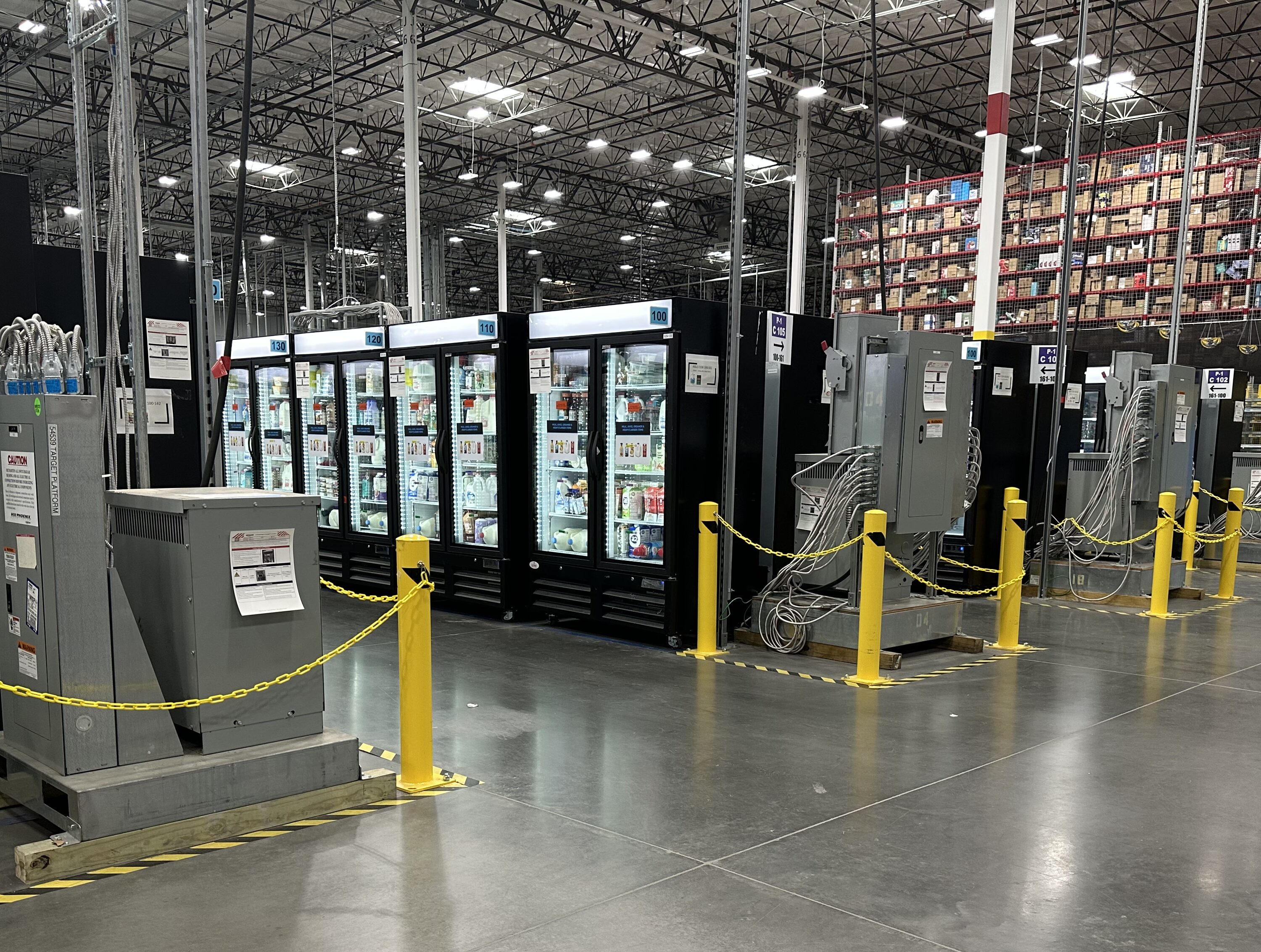
Refrigeration units in a spacious warehouse, featuring grey floors and yellow safety barriers.

Proven at Scale

When one national grocery retailer experienced a rapid increase in online grocery demand, it needed additional refrigerated picking and staging capacity across dozens of locations, but couldn’t wait months for construction projects or permanent refrigeration installations.

Lowe Rental responded with a nationwide rollout of modular refrigerated solutions, delivering and installing equipment at 65 eCommerce picking and staging facilities across 43 U.S. locations in just 14 days.

The results demonstrated how quickly flexible refrigeration can improve fulfillment performance:

  • 65 sites operational in just two weeks
  • Average increase of 7.5 orders per hour (OPH) across all upgraded locations
  • Every location improved productivity by at least 15%
  • Top-performing sites achieved productivity gains of up to 50%
  • No refrigeration pipework, plumbing, or floor drains required, allowing for true plug-and-play installation with minimal disruption

For retailers facing store remodels, new fulfillment initiatives, or rapid expansion, the ability to quickly add or relocate refrigerated capacity can be just as valuable as the equipment itself.

Flexibility Is the Competitive Advantage

Online grocery continues to mature, and customer expectations continue to rise. Average order values have increased across every major fulfillment method, with ship-to-home orders growing 14% year over year and both pickup and delivery increasing by 9%.

As fulfillment operations become an increasingly important part of grocery retail, refrigeration needs to do more than preserve product quality. It needs to support changing business strategies.

Whether fulfilling orders from an existing store, operating a dark store, launching a micro-fulfillment center, or testing an entirely new model, retailers need refrigeration that can move as quickly as their operations.

Because while no one knows exactly what grocery eCommerce will look like five years from now, one thing is certain: flexibility will continue to be one of the industry’s greatest competitive advantages.